

Pennsylvania winters can be hard on a vehicle long after the snow stops falling. Salt, brine, slush, moisture, and repeated winter driving can leave the underside of a car or truck exposed to conditions that encourage corrosion.
For drivers who plan to keep their vehicles through multiple PA winters, oil undercoating is one option for protecting vulnerable metal underneath.
Quick answer: Yes, oil undercoating can help prevent rust by creating a protective barrier that reduces direct contact between metal surfaces and moisture, salt, and other corrosive road contaminants. It is not a permanent cure for existing rust, and it does not make a vehicle rust-proof. Its effectiveness depends on proper application, coverage, vehicle condition, and ongoing maintenance.
What Pennsylvania drivers should know
-
Oil undercoating is intended to slow corrosion by protecting exposed metal from moisture and road contaminants.
-
Pennsylvania winter driving can expose vehicles to salt and salt brine used for snow and ice control.
-
High-mileage commuters on routes such as I-76, I-80, I-81, and the Pennsylvania Turnpike may experience repeated winter road-treatment exposure.
-
Existing rust should be evaluated before application because undercoating does not restore metal already damaged by corrosion.
-
Undercoating should be inspected periodically because coverage can change as a vehicle is driven.
Why Does Oil Undercoating Matter for Pennsylvania Drivers?
Oil undercoating matters for Pennsylvania drivers because winter road treatments, moisture, snow, and slush can repeatedly reach exposed metal underneath a vehicle. That exposure can contribute to corrosion over time, particularly around seams, suspension components, frame areas, and other places where moisture and contaminants collect.
PennDOT uses salt and salt brine as part of its winter road maintenance program. The agency reports using an average of roughly 598,000 tons of salt over the past five winters, along with salt brine for anti-icing and pre-wetting applications.
That means winter exposure is relevant whether you regularly drive around Pittsburgh, commute through Harrisburg, travel through the Lehigh Valley, or spend winter miles on highways around Philadelphia, Erie, or Scranton.
At Ultimate Undercoating, we help vehicle owners understand underbody protection options and how they fit into long-term vehicle maintenance.
Does Pennsylvania Really Use Enough Road Salt to Affect Vehicles?
Pennsylvania uses substantial amounts of salt and brine during winter operations, creating regular opportunities for those materials to reach vehicle underbodies. PennDOT says it maintains nearly 40,000 miles of roadway and approximately 25,400 bridges and has averaged about 598,094 tons of salt over the past five winters.
PennDOT also uses salt brine before some storms to help keep ice from bonding to pavement. Brine is essentially salt mixed with water, and the agency may also use it to pre-wet road salt.
For vehicle owners, the practical point is simple: winter road treatments do not stay neatly on the pavement. Tires and passing traffic can spray wet road residue onto wheel wells, suspension parts, seams, frames, and other underbody surfaces.
How Does Oil Undercoating Help Prevent Rust?
Oil undercoating helps prevent rust by leaving a protective coating on metal surfaces that limits their exposure to moisture and corrosive road contaminants. Instead of attempting to create a permanently hard shell, an oil-based treatment is designed to coat areas where corrosion commonly develops.
Coverage matters. A vehicle’s underside contains joints, seams, cavities, brackets, fasteners, and overlapping metal where road spray can collect.
This is particularly relevant during a PA winter. A driver may encounter brine before a storm, salt during the storm, wet slush afterward, and additional moisture as temperatures rise. Reducing direct exposure of metal to those conditions can help slow corrosion.
Undercoating should still be viewed as preventive maintenance rather than a guarantee that rust will never develop.
What Are the Warning Signs of Underbody Rust?
Warning signs of underbody rust include surface discoloration, flaking metal, bubbling coatings, heavily corroded fasteners, and visible deterioration around structural or suspension areas. Pennsylvania drivers should pay particular attention after several winters of regular exposure to treated roads.
Signs worth checking include:
-
Orange or brown corrosion appearing on exposed metal.
-
Scaling or flaking on frame or underbody components.
-
Factory coatings that are peeling, cracked, or missing.
-
Rust forming around welds, seams, brackets, or mounting points.
-
Corroded bolts and fasteners underneath the vehicle.
-
Visible deterioration around wheel wells and suspension areas.
-
Areas that consistently hold mud, salt residue, or moisture.
Surface rust and severe corrosion are not the same thing. If metal appears significantly weakened, damaged, perforated, or structurally compromised, it should be evaluated by an appropriate automotive repair professional.
When Should You Have a Vehicle Professionally Undercoated?
Professional undercoating is worth considering before repeated winter exposure, especially if you want more complete coverage than a basic DIY application may provide. Drivers can safely inspect accessible areas themselves, but properly reaching seams, cavities, and difficult underbody areas may require equipment and application experience.
Timing can also matter. Having the vehicle inspected before the heart of winter gives you an opportunity to identify existing corrosion and determine whether undercoating makes sense before another season of salt and brine exposure.
Drivers who recently purchased a new vehicle, used vehicle, truck, SUV, or work vehicle may also want to establish a baseline for its current underbody condition.
What Commonly Causes Vehicle Rust in Pennsylvania?
The most common local contributors to vehicle rust are road salt and brine exposure, moisture, trapped debris, damaged protective coatings, and repeated winter driving. These conditions often overlap during Pennsylvania’s freeze, thaw, snow, and slush cycles.
Road treatment is a major consideration. PennDOT uses salt as its primary winter material on higher-volume roads and can pretreat pavement with salt brine before qualifying storms.
Wet winter conditions add another factor. Slush and road spray can carry contaminants into tight underbody spaces. Mud and debris may also hold moisture against surfaces.
Finally, normal wear matters. Stone impacts, road debris, and years of driving can damage or remove protective coatings, exposing metal that previously had a barrier against the elements.
How Can PA Drivers Reduce Underbody Corrosion?
PA drivers can reduce underbody corrosion by combining protective treatments with routine inspections, appropriate cleaning, and attention to areas where salt and moisture collect. Prevention is most effective when it starts before corrosion becomes extensive.
Inspect the underside periodically, particularly before and after winter. Watch wheel wells, seams, exposed metal, suspension areas, and locations where protective coatings have been damaged.
Removing accumulated road grime and winter residue can also be part of vehicle maintenance. Avoid assuming that one undercoating application means the underside never needs attention again. Protective coverage should be checked periodically and maintained as appropriate for the product and vehicle.
DIY inspections are useful for spotting obvious changes. Repairs involving structural corrosion, brake components, suspension mounting points, or other safety-related systems belong with qualified automotive professionals.
What Results Should You Expect From Oil Undercoating?
Oil undercoating should be expected to help slow corrosion rather than permanently eliminate the possibility of rust. A properly applied coating adds protection between vulnerable metal and the salt, brine, water, and road grime encountered during Pennsylvania driving.
Results depend on the vehicle’s starting condition. A newer vehicle with clean metal presents a different situation from an older truck that has already spent ten winters traveling treated PA roads.
Existing corrosion also does not simply disappear after an oil treatment. The goal is protection and corrosion control, not restoration of metal that has already been lost.
What Mistakes Should Pennsylvania Drivers Avoid?
Pennsylvania drivers should avoid treating undercoating as a one-time rust cure or assuming that every vehicle needs exactly the same preparation and application. Vehicle age, existing corrosion, previous coatings, usage, and winter exposure all affect the appropriate approach.
Mistake: Ignoring existing rust before treatment.
Consequence: Serious corrosion or damaged components may go unnoticed.
Better approach: Inspect the underbody first and address repair concerns appropriately.
Mistake: Assuming more product automatically means better protection.
Consequence: Excess material does not compensate for poor preparation or missed areas.
Better approach: Focus on appropriate, thorough coverage.
Mistake: Applying protection and never checking it again.
Consequence: Wear or exposed areas may develop without the owner noticing.
Better approach: Include underbody checks in ongoing maintenance.
What Is a Common Pennsylvania Rust Scenario?
A common Pennsylvania scenario is a vehicle that looks clean from above but has spent several winters accumulating corrosion underneath. Consider a daily driver that regularly travels a treated interstate during winter and then sits in a garage while salty slush melts from the underbody.
Over several seasons, corrosion may begin around exposed hardware, seams, brackets, and areas where original protective material has worn away.
This is not a case study or a description of a specific customer. It illustrates why looking at exterior paint alone does not tell you what is happening underneath a Pennsylvania vehicle.
What Undercoating Services Can Help?
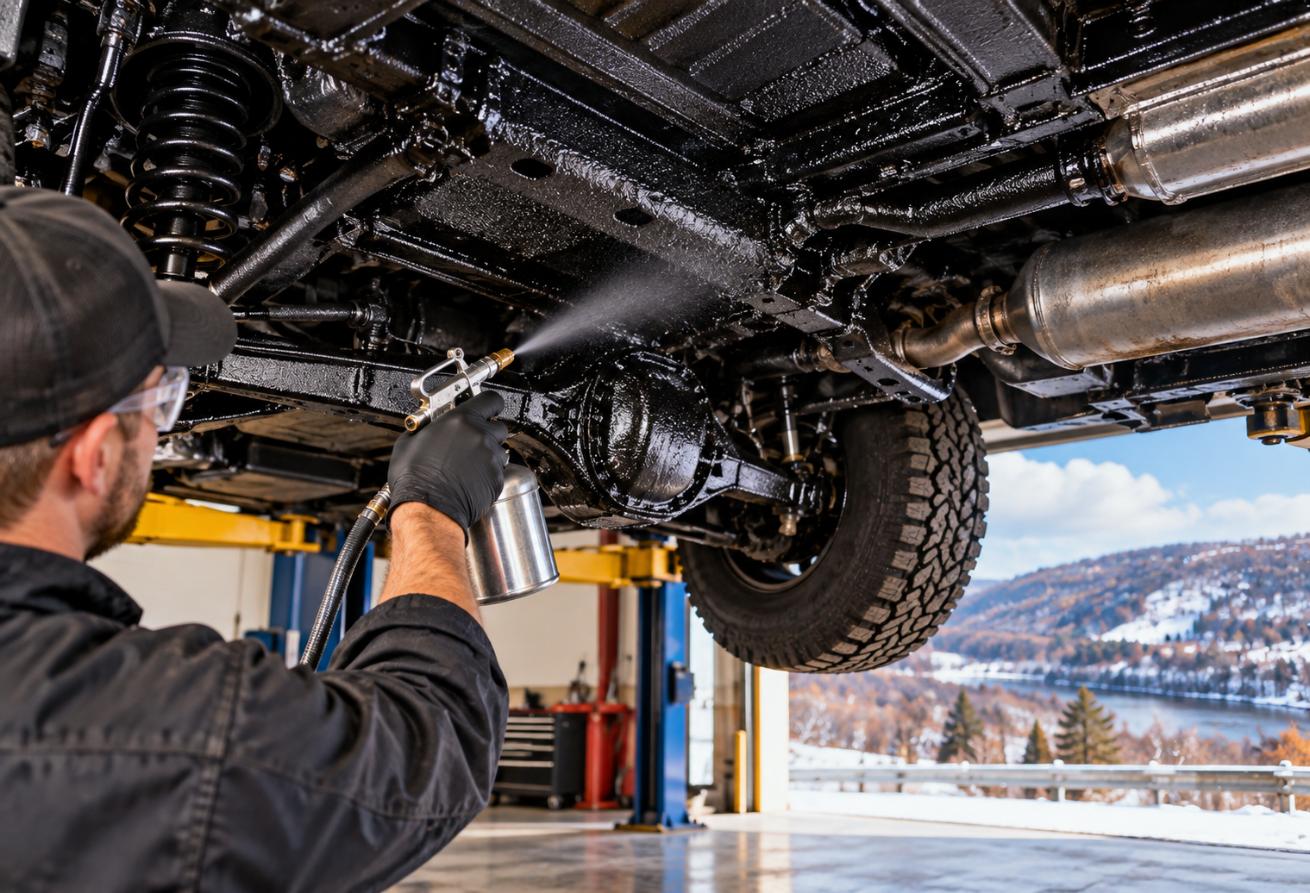
Professional oil undercoating can help protect vulnerable underbody areas by applying corrosion-resistant material where winter road exposure occurs. The appropriate service depends on the vehicle’s age, existing condition, previous treatments, and how it is used.
At Ultimate Undercoating, we can help vehicle owners evaluate underbody protection options without treating undercoating as a substitute for necessary mechanical or structural repairs.
Is DIY or Professional Oil Undercoating Better?
DIY and professional undercoating can both add protection, but they differ in access, preparation, application equipment, and coverage. DIY treatment may make sense for drivers who understand their vehicle and can safely access appropriate areas, while professional service can make thorough application easier.
DIY work requires particular caution around brakes, exhaust components, belts, and other areas where products should not be indiscriminately applied.
Professional application can also make it easier to inspect the vehicle before treatment and reach areas that are difficult to access with a vehicle sitting on the ground.
Where Is Oil Undercoating Useful in Pennsylvania?
Oil undercoating can be useful throughout Pennsylvania because winter road treatment occurs across the Commonwealth, although exposure varies with weather, location, and driving habits. Vehicles traveling around Pittsburgh, Harrisburg, Erie, Scranton, the Lehigh Valley, Philadelphia, and surrounding communities may encounter treated roads during winter weather.
Drivers who routinely use interstates, state routes, bridges, and other priority winter roads may experience repeated salt and brine exposure during a typical winter season.
What Can Happen If Vehicle Rust Is Ignored?
Ignoring underbody rust can allow corrosion to progress from a maintenance concern into damaged components or more involved repairs. The rate varies considerably by vehicle, environment, maintenance history, and the specific metal involved, so there is no universal timeline.
Catching corrosion early gives owners more information and more options. Once metal has experienced significant deterioration, protective treatment cannot replace the material that has already been lost.
FAQ
Does oil undercoating stop rust completely in Pennsylvania?
No, oil undercoating does not make a Pennsylvania vehicle completely rust-proof. It is a preventive treatment intended to reduce metal’s exposure to moisture, salt, brine, and other corrosive material. Existing vehicle condition, application quality, coverage, driving habits, and continued maintenance all influence long-term corrosion.
Is oil undercoating worth considering for PA winters?
Oil undercoating is worth considering when reducing winter corrosion is a priority for your vehicle. Pennsylvania uses salt and brine for winter road treatment, so vehicles can receive repeated exposure underneath. Whether treatment makes sense for a particular car or truck depends on its condition, age, use, and maintenance goals.
Does PennDOT use salt brine on Pennsylvania roads?
Yes, PennDOT uses salt brine as part of its winter road operations. The agency describes anti-icing as applying brine before certain winter storms to slow or prevent ice from bonding to pavement. PennDOT also uses brine to pre-wet salt in some conditions.
Should I undercoat a brand-new vehicle in PA?
A newer vehicle can be considered for undercoating before it accumulates years of winter road exposure. Starting with relatively clean underbody surfaces can make preventive protection appealing to owners who expect to keep a vehicle long term. The vehicle’s factory protection and condition should still be considered before treatment.
Can you oil undercoat a vehicle that already has rust?
A vehicle with existing rust may still be considered for oil undercoating, but the rust should be evaluated first. Light surface corrosion is different from metal that is scaling, perforated, or structurally weakened. Undercoating cannot rebuild damaged metal or replace repairs needed for safety-related components.
When is the best time to undercoat a vehicle in Pennsylvania?
Before heavy winter road-treatment exposure is a practical time to consider undercoating in Pennsylvania. An inspection before winter can reveal existing corrosion, damaged coatings, and other concerns before salt and brine become frequent. Treatment timing should also account for vehicle cleanliness, condition, and the requirements of the product being applied.
Do I still need to inspect my vehicle after oil undercoating?
Yes, periodic inspection remains important after oil undercoating. Normal driving can expose the underside to water, debris, road grime, salt, and physical wear. Checking coverage periodically helps identify areas that may need attention and can also reveal unrelated mechanical or corrosion concerns.
Are Pennsylvania highway drivers exposed to more road treatment?
Drivers who frequently travel treated roads can experience repeated winter exposure, although the exact amount varies by weather and route. PennDOT prioritizes major highways during storms and uses salt as a primary winter material on higher-volume roadways, making underbody inspection especially relevant for frequent winter commuters.
Protect Your Vehicle Before Another PA Winter
Pennsylvania drivers cannot eliminate winter salt, brine, moisture, and slush from the roads, but they can take practical steps to protect the metal underneath their vehicles. We can help you evaluate whether oil undercoating fits your vehicle’s condition and long-term maintenance plans.
Help protect your vehicle from Pennsylvania winter corrosion.
Get straightforward guidance on the right underbody protection approach for your vehicle.